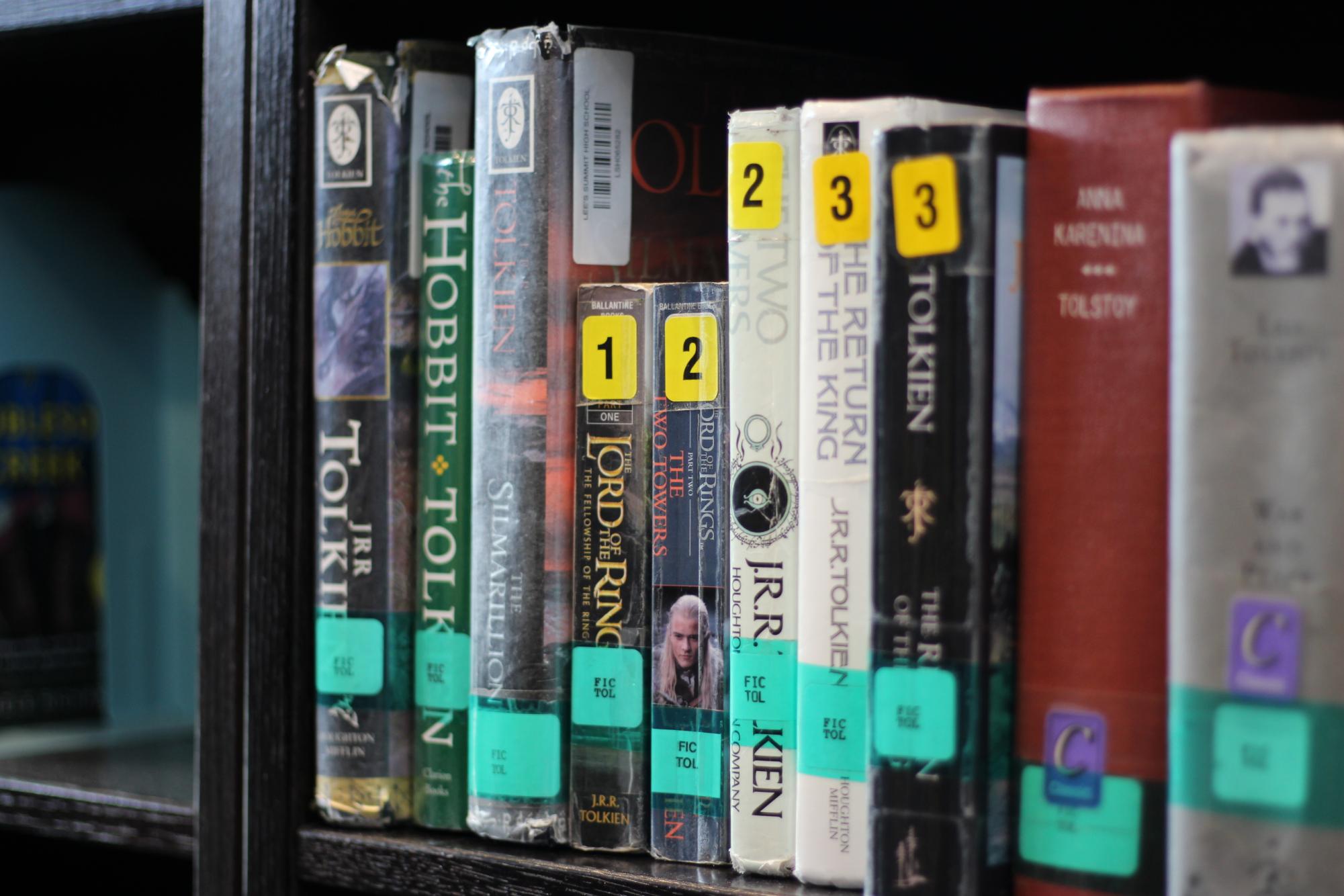
The Lord of the Rings is one of the most iconic novels written in the past century: its very name has become etched into popular culture, yet Tolkien is only known for the Hobbit and the Lord of the Rings. Many of us think that its descendent, the Silmarillion, flowers forth from the Lord of the Rings as the backstory and prequel, filling in the First Age of the Wars between the Noldor and Morgoth…but Tolkien thought differently. He saw the Silmarillion as the ‘main event’ and the Lord of the Rings the ‘conclusion’ of what he called ‘the Saga of the Three Jewels (the Silmarils) and the Rings of Power.’ Spoilers abound.
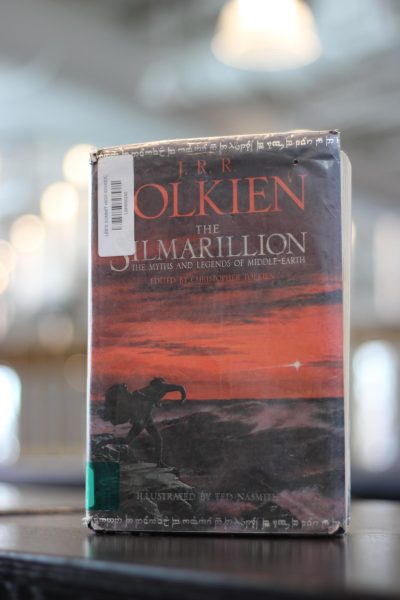
Unlike The Lord of the Rings, which has a relatively simple plot, the Silmarillion is among the densest work in fantasy, this being in part that the published version (edited by Christopher Tolkien, J.R.R. Tolkien’s third son) was less of a coherent draft and more sampling of different drafts from old versions. It has five main parts: the Ainulindalë, an account of the creation of the world; Valaquenta, an exposition of the Valar and their powers, as well as the Maiar and their enemies; the Quenta Silmarillion, the main event, the history of the Wars of Beleriand in the First Age and all the horror and tragedy that came with it; Akallabêth, the history of
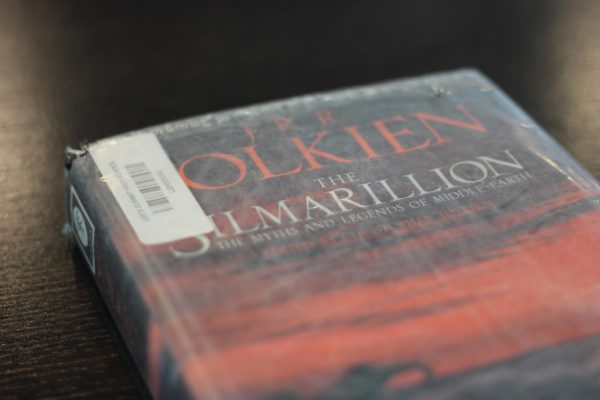
Númenor and its downfall after Sauron, the Lord of the Ring, comes to the mainland to tempt its destruction; and the last part of the Silmarillion, Of the Rings of Power and the Third Age, a recap of Sauron’s plot with the Rings of Power, his war with Elves and dealings with Numenor and its colonies Gondor and Arnor, his war with the Last Alliance of Men and Elves, the losing of his One Ring, and the slow decline of Middle-earth from mythical to mundane and the slow rising of Sauron until the destruction of the Ruling Ring.
After the Hobbit was published to great success, Allen and Unwin, J.R.R. Tolkien’s publishers requested a sequel be written. He delivered to them a draft of the 1937 Quenta Silmarillion (this can be read in History of Middle-earth, Volume V; the Lost Road and Other Writings) which was rejected as ‘too celtic’, and by December Tolkien had begun writing the Lord of the Rings in what would take nearly two decades to write and finish.
There is simply too much in the published Silmarillion for any precise recounting to be delivered, but I will try: the Valar fight Melkor (later to be Morgoth) for countless ages until Tulkas, a Vala, most war-like of the Valar, comes down and scares off Melkor. Aule forges Dwarves and is told off by Eru, (an anagram for the Abrahamic God; Tolkien was a devout Catholic) and the Dwarves are put to sleep until the awakening of Elves. To prevent the Elves from being corrupted by Melkor, the Valar and a few of the Maiar take Melkor from his fortress of Angband, but Balrogs and Sauron, Melkor’s chief leftenant, escapes. They take him back to Valinor, their home, and he is chained under Mandos for three ages. Eventually Melkor is released from servitude by fooling Manwe into thinking that Melkor is good in heart. He begins seducing the Noldor to his cause, making them believe that the Valar hate them and want to prevent them from dominating Middle-earth. Among the most affected is Feanor, and he makes the Silmarils to capture the light and beauty of the Two Trees.
Hating the Valar and the Noldor and determined to get his revenge, he attempts to turn Feanor against the Valar, but flees when Tulkas is notified of such events. Making his way south to the southernmost of Valinor, he meets Ungoliant, an eldritch spirit of night and eternally hungry, taking the form of a huge spider. The same day Fingolfin and Feanor are set to be reconciled, for Feanor had threatened Fingolfin, Melkor and Ungoliant would destroy the Two Trees. Melkor pierces them deep, their sap pouring forth as if it were blood, and Ungoliant drinks them and burps out poisonous clouds that choke the Two Trees, Telperion and Laurelin. They flee over the Helcaraxe, and Ungoliant flees after Morgoth (he is called this after he destroys the Two Trees) beats her off with the Balrogs. On their way they steal the Silmarils and sack Formenos in Valinor. Feanor and his sons swear an irrevocable oath to pursue any who withhold the Silmarils. They slaughtered the Teleri, master ship-builders, at the coast of Valinor in Alqualonde, in Kinslaying. After they land at Lammoth and burn the ships, Morgoth sends a host of Orcs to pre-emptively destroy Feanor’s might. They are repelled, and pursue the orcs until near Angband, where Feanor was ambushed by Balrogs, and he died. This was the Dagor-nuin-Giliath, the Battle Under Stars.
After they beat Morgoth again in the Daglor Aglareb, the Glorious Battle, the Noldor begin the 400 year-long siege of Angband, during which Morgoth begins experimenting with Dragons upon realizing that the Orcs bear little against the Elves. About the winter of 455 years after the rise of the First Sun, great rivers of fire come and destroy much of the Noldor-guard to the west and, though Morgoth loses a great deal of his armies, the Noldor are beaten down and are forced to retreat south to Gondolin and Doriath. This is the Dagor Bragollach, the Battle of Sudden Flame. Upon Hurin Morgoth pronounces a curse upon his children that would doom them, and Beren and Luthien, daughter of the King of Doriath Thingol, steal a Silmaril from the Iron Crown. Encouraged by Beren and Luthien’s success, Fingolfin, High King of the Noldor, attempts to assault Angband once again, but Morgoth, predicting it, sends out Easterlings tasked with betraying the Host of the Noldor to the west. Once again Morgoth loses a great number of his armies, the Noldor, along with their friendships of the Elves and Dwarves, lose nearly all of their armies. This is the Nirnaeth Arnoediad, the Battle of Unnumbered Tears. Later, in the biggest betrayal of the First Age, Maeglin, wanting Idril’s hand in marriage and resenting Tuor’s marriage to her, agrees to give the location of Gondolin and all the ways in which it could be entered, and Morgoth gives Maeglin freedom and Idril’s hand. Gondolin is sieged and falls, and now only Earendil stands in the way to Morgoth’s total annihilation of all. Earendil eventually comes to Valinor and begs the Gods of Valinor to help them, when the hour of Morgoth’s domination poised over the earth comes, and ends it all in the War of Wrath, with all the Valar and Maiar in it. Morgoth is exiled down into the void, but Sauron escapes in the confusion. He would go on to dupe the Elves into forging the Rings.
This work is a brilliant piece of fantasy. Tolkien often jumps between Valinor and Beleriand, has a cast of many characters with much similar names, and as such this is often seen as a challenge, but well worth the effort. It is less of a ‘novel’ and more of a fictional recounting of a long history, presented through the lens of a long lost manuscript rediscovered.
Sources:
Letter 125. The Letters of J.R.R. Tolkien, Revised and Expanded
Letter 19. The Letters of J.R.R. Tolkien, Revised and Expanded