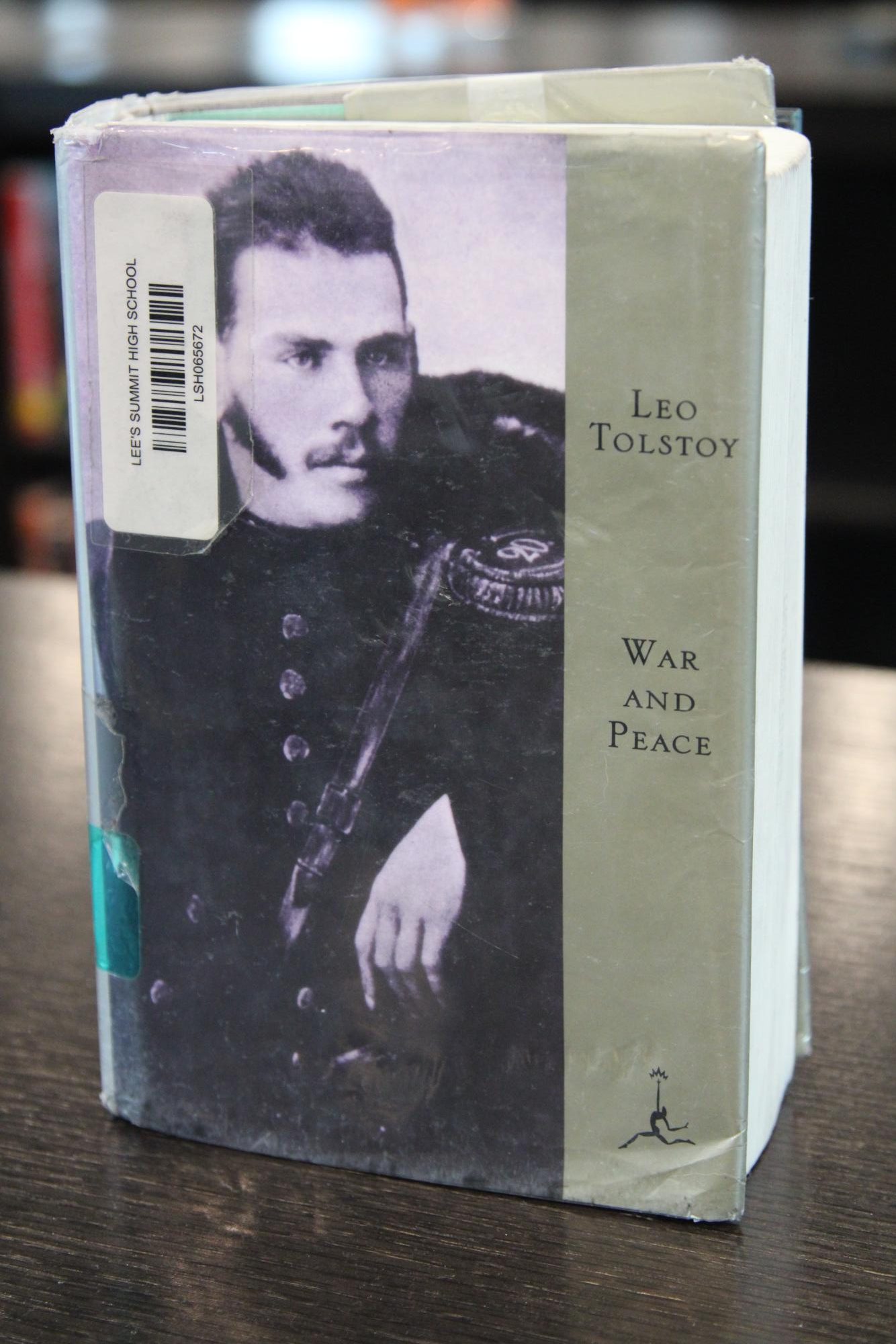
Leo Tolstoy is among the most influential writers of all time. His two most well known works, War and Peace and Anna Karenina are frequent competitors for the title “greatest literary work ever written.” Tolstoy himself was born in 1828, and his first major work as well as autobiographical trilogy, Childhood, Boyhood, and Youth was published to critical acclaim in the early-mid 1850s. He also served a stint as an artillery officer in the Crimean War. He was strongly repulsed during the nearly year-long Siege of Sevastopol by the violence and men senselessly slaughtered in the battle. After the Crimean War, he took a trip to France where he met Victor Hugo, author of Les Miserables, and this inspired the famous realistic battle scenes in War and Peace. There is no hope of trying to summarize this book, as it is long.
It has enough plotlines, if it were written today it would take at least five-six books to finish. It also has over five hundred characters, many of whom are historical, and most of the fictional characters come from five families: the Bezukhovs, the Bolkonskies, the Rostovs, the Kuragins, and the Drubetskoys. It is also not a novel, Tolstoy insisted, because there is no one main narrative dominating the story (Napoleon’s invasion starts in Part 9) and the rest is occupied with various plots with almost soap-opera-like stuff.
Sometimes, Leo Tolstoy interrupts the narrative to pen a polemic of the “great man of history” theory, an idea that great men decide history, not social, economic and cultural forces. Instead, Tolstoy prefers an idea in which Providence (a name for God) uses all things, even people like Napoleon, as “history’s slaves” for unknown ends. An entire epilogue is dedicated to further criticizing the great-man theory, and the other epilogue is detailing the fates of the many characters in the story.
Tolstoy wanted the story to be about the pardoning of the Decemberists, who revolted against Tsar Alexander I in 1825, and again three years later, failing to overthrow him. But then a problem: arose, how could he do that without telling of their revolt, and how could he tell that without telling the story of Napoleon’s disastrous invasion of Russia in 1812 prompted authoritarianism; and so on and so forth. After about two years of writing (from 1863) he published an early version of the story titled 1805, then spent the next four years reworking and expanding the story.